Do Solar Panels Need Planning Permission?
Table of Contents
Do Solar Panels Need Planning Permission? The Quick Answer
Understanding Solar Panel Permitted Development Rules
Roof-mounted panels and the 150 mm rule
Ground-mounted and flat-roof installations
Solar Panels on a Listed Building: Planning Permission Requirements
Conservation Areas and Areas of Outstanding Natural Beauty
Solar Panel Planning Application Process: Step by Step
Documents and fees you'll need
Timeline and what to expect
Solar Panel Planning Permission Cost and Hidden Charges
Building Regulations, Electrical Safety, and Grid Connection
What to Do If Solar Panels Are Installed Without Permission
Frequently Asked Questions
Last Updated: October 12, 2026
Do Solar Panels Need Planning Permission? The Quick Answer
Most domestic solar panel installations don't need planning permission in England, Wales, Scotland, and Northern Ireland; they typically fall under permitted development rights. But there are important exceptions. If your property is listed, sits in a conservation area, or lies in an area of outstanding natural beauty, the rules change significantly. Ground-mounted panels face stricter requirements than roof-mounted ones, and if your panels project more than 150 mm above the roof plane, you'll likely need to apply.
The difference between a straightforward installation and one requiring formal approval often comes down to a few specific details about your property and the panel design. Get those details wrong, and you could face enforcement action.

Understanding Solar Panel Permitted Development Rules
Permitted development rights allow homeowners to install solar panels without formal planning permission, provided certain conditions are met. This is the fastest, cheapest route: no application fees, no council review, no waiting for approval.
The basic rule is straightforward: roof-mounted photovoltaic panels are permitted development in most cases, across England, Wales, Scotland, and Northern Ireland, though some regional variations exist. You can install them without notifying your local planning authority.
However, permitted development is not automatic permission to do whatever you want. The rules set specific limits on size, position, and type of installation. Exceed those limits, and you lose the exemption. You'll then need formal planning permission.
Roof-mounted panels and the 150 mm rule
The 150 mm rule is the single most important measurement for roof-mounted solar panels. Your panels cannot project more than 150 millimetres above the highest point of your roof, measured from the roof plane itself.
This limit exists to control visual impact. Panels sitting flush or nearly flush with the roof are less noticeable, while panels that stick up significantly change the building's profile and may require planning permission to protect the character of the area.
If your roof slopes at an angle, the 150 mm measurement is taken vertically from the highest point of the roof slope, not along the slope itself.
What happens if your panels exceed 150 mm? You lose permitted development rights and must apply for planning permission. Permission isn't automatically refused, but your local council will assess the proposal, which takes longer and costs money in application fees.
Ground-mounted and flat-roof installations
Ground-mounted solar panels face tighter restrictions than roof-mounted ones. They are not automatically permitted development in most areas. You typically need planning permission for ground-mounted arrays, even if they're small and on your own land.
The reasoning is straightforward: ground-mounted panels are more visible, take up garden space, and affect the character and appearance of your property more obviously than roof panels, so local planning authorities want to review these proposals.
Flat-roof installations sit in a middle ground. Panels lying flat may qualify for permitted development if they don't project above the roof edge.
The practical takeaway: assume ground-mounted panels need planning permission unless your local council confirms otherwise. Flat-roof panels need careful measurement to check the 150 mm limit.
Solar Panels on a Listed Building: Planning Permission Requirements
If your property is listed, the rules change entirely. Listed-building status means your home has special architectural or historic interest, and you cannot make external alterations without listed-building consent, regardless of whether planning permission would normally be required.
Solar panels on a listed building almost always need formal consent.
Listed-building consent is a separate process from planning permission. You apply to your council's conservation team or heritage officer, and the assessment focuses on visual impact, reversibility, and whether the panels damage original features.
Many listed buildings get consent for solar panels, but expect a period of weeks for a decision.
If you install panels without consent on a listed building, you risk enforcement action; the council can serve a notice requiring removal. This is a costly mistake that can delay your renewable energy investment by months or years.
Pro Tip Before designing your system, ask your local planning authority whether your property is listed. If it is, contact the heritage officer early in your planning. They can advise on what's likely to be acceptable before you invest in detailed designs.
Conservation Areas and Areas of Outstanding Natural Beauty
Properties in conservation areas face additional planning restrictions. A conservation area is a designated neighbourhood where the local planning authority wants to preserve the character and appearance of the street scene (Conservation area Dataset).
Solar panels in a conservation area may still be permitted development, but only if they meet strict conditions.
Panels on the rear roof slope of a house in a conservation area are usually permitted development. Panels on a side elevation or the front elevation typically require planning permission.
Areas of outstanding natural beauty (AONB) are protected landscapes. If your home sits within an AONB, permitted development rights are often restricted or removed entirely.
The rules vary by location. Some AONBs have blanket restrictions on solar panels. Others allow them with conditions. Your local planning authority holds the definitive answer.
Watch Out Check your property's designation before you commit to a solar installation. A conservation area or AONB status can turn a permitted development into a planning application. The cost and delay can be significant.
Solar Panel Planning Application Process: Step by Step
If your installation does not qualify for permitted development, you need to submit a solar panels planning permission application. The process is standardised but requires preparation and patience.
Step 1: Confirm you need planning permission. Contact your local planning authority and describe your proposed installation. They will confirm whether planning permission is required.
Step 3: Submit your application. Applications go to your local planning authority. You can submit online via the council's planning portal or by post.
Step 4: Wait for consultation and assessment. The council publishes your application and invites comments from neighbours and consultees for around 21 days.
Step 5: Receive a decision. The council issues a decision notice granting permission, granting permission with conditions, or refusing.
Documents and fees you'll need
Planning applications require specific documents. Missing paperwork delays your application or causes rejection.
Essential documents:
Completed planning application form
Site location plan (showing your property in context)
Existing block plan (showing current roof and building layout)
Proposed block plan (showing panel locations and dimensions)
Elevation drawings (showing panels on the roof from street view)
Design and access statement (explaining your proposal)
Photographs of the existing property
Application fees vary by local authority. Fees are non-refundable even if permission is refused, so accuracy matters.
Additional costs to expect:
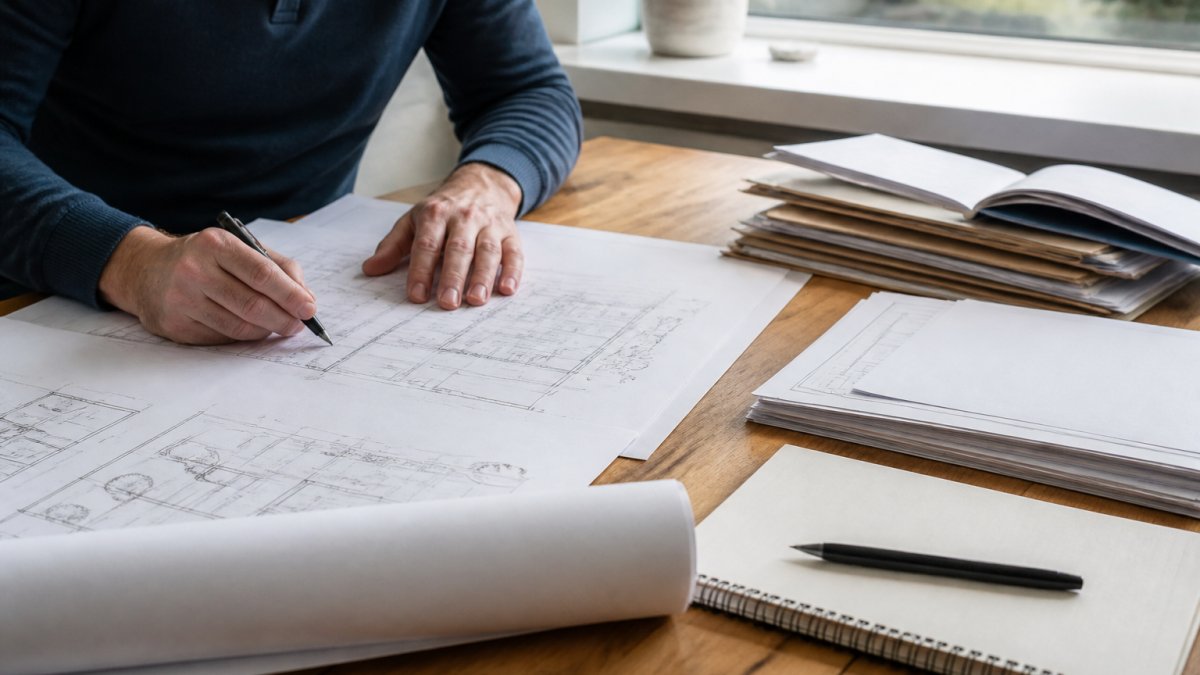
Architectural drawings: if you need professional help, budget for these costs
Structural engineer report: required if the roof needs assessment
Building control approval: separate from planning
Timeline and what to expect
A planning application for solar panels typically takes a period of weeks from submission to decision, depending on workload, consultation responses, and whether the officer needs clarification.
Week 1-2: Application submitted and validated; the council checks all documents are present and the fee paid.
Week 2-3: Application published. Neighbours and consultees are notified. This is the statutory consultation period.
Week 4-8: Planning officer reviews the proposal. If no objections are raised and it complies with policy, approval can come quickly; if objections arrive or the officer has concerns, this phase extends.
Week 8-12: Decision issued. The council publishes a decision notice. If approved, you can proceed with installation.
If the application is refused, you have the right to appeal to the Planning Inspectorate. Appeals take time and cost additional fees.
Solar Panel Planning Permission Cost and Hidden Charges
The cost of obtaining planning permission for solar panels extends beyond the application fee. Understanding the full picture helps you budget accurately.
Direct costs:
Planning application fee: £150-£300
Professional drawings: £300-£800 (if you need an architect or surveyor)
Building regulations approval: £100-£300
Structural engineer assessment: £200-£500 (if your roof needs evaluation)
Indirect costs:
Time spent gathering documents and coordinating submissions
Delays to your installation timeline while waiting for approval
Potential need to revise designs if the council raises concerns
Many homeowners underestimate these costs. The application fee is modest, but professional help with drawings and documentation adds up quickly, and if your roof is old or complex, structural assessment becomes necessary.
Sd Architecture helps clients navigate these costs upfront.
Key Takeaway Budget for planning and building control approval if you need professional help with drawings. If your roof is straightforward and you can prepare drawings yourself, expect these costs.
Building Regulations, Electrical Safety, and Grid Connection
Planning permission and building regulations are separate approvals. You can have planning permission but still fail building control inspection. Both are required.
Building regulations cover the structural safety and electrical integrity of the installation. The building control officer inspects the work to ensure it meets safety standards.
Your installer should handle most building control compliance, notifying building control, arranging inspections, and obtaining a completion certificate. This is standard practice and included in most installation quotes.
Electrical safety is critical. Your solar system must be installed by a qualified electrician or installer certified by the relevant scheme (MCS, NAPIT, ELECSA). They ensure the wiring, inverter, and grid connection are safe and compliant.
Grid connection is a separate process.
These approvals sit outside planning and building control but are essential. A complete solar installation project includes planning permission, building regulations approval, electrical certification, and grid connection approval.
What to Do If Solar Panels Are Installed Without Permission
If solar panels are installed without the required planning permission or building regulations approval, you face potential enforcement action.
Enforcement notices typically give 60 days to comply.
Retrospective planning permission is an option if panels are installed without approval.
Building control can also take action if panels are installed without approval, requiring removal or demanding an engineer certify the work as safe.
The practical lesson: obtain approval before installation. The cost and hassle of retrospective permission far exceed getting it right the first time.
If you're uncertain whether your installation needed permission, contact your local planning authority now. They can advise whether enforcement is likely and whether retrospective permission is possible.
Solar panel installations are a sound investment for most homeowners, but the planning rules matter. A few hours spent confirming your position now saves months of delay later.
Frequently Asked Questions
Do I need planning permission to install solar panels on my house?
Most domestic solar panel installations fall under permitted development rights and do not require planning permission. Roof-mounted panels that do not project more than 150 mm above the roof plane are exempt. However, if your property is listed, located in a conservation area, or in an area of outstanding natural beauty, you will need planning permission. Check your property's status with your local planning authority before proceeding.
What is the 150 mm rule for solar panels?
The 150 mm rule refers to how far roof-mounted solar panels may project above the roof plane without requiring planning permission. If your panels stay within this measurement, they typically qualify as permitted development. Panels projecting beyond 150 mm, or any installation on a listed building or in a protected area, require formal planning permission from your local council.
How do I apply for planning permission for solar panels?
Submit a planning application to your local planning authority with site plans, elevation drawings, and technical specifications of your solar PV system. Include photographs of the property and details of the installation location. Processing typically takes a period of weeks. Your local council will consult neighbours and assess whether the installation affects the character or heritage value of the area. Fees vary by location.
Do solar panels need planning permission on a listed building?
Yes. Listed-building consent is mandatory for any solar panel installation on a listed property, regardless of size or location on the building. The local planning authority must approve the installation to ensure it does not harm the heritage value or character of the building. This process is separate from standard planning permission and typically takes longer to assess.
What other approvals do I need besides planning permission?
Building regulations approval is required for all solar panel installations to ensure electrical safety and structural integrity. You may also need grid-connection approval from your electricity distributor, especially if you plan battery storage. Structural engineering certification may be necessary for flat-roof or ground-mounted systems. These approvals add to overall timelines and costs but are essential for safety compliance.
Get Started Today
Comments