How to Maintain Historic Features in Hampshire Homes?
Quick Summary
Maintaining historic features in Hampshire homes means inspecting them twice a year, repairing faults early with matching materials, and using breathable lime-based methods rather than modern cement products. Timber sash windows are often worth repairing, and any change affecting a listed building's character may need listed building consent first.
Walk the property inside and out, and keep dated photos to track any change.
Inspect the room-by-room checklist twice a year to catch problems early.
Use lime plaster and mortar, since cement-based products trap moisture inside walls.
Repair timber sash windows where the core is sound, cutting out rot and splicing in matching timber.
Get listed building consent before alterations affecting a listed building's character, as working without it is a criminal offence.
Table of Contents
Assessing the Condition of Your Historic Features
Many owners of older homes only notice a problem once it has spread.
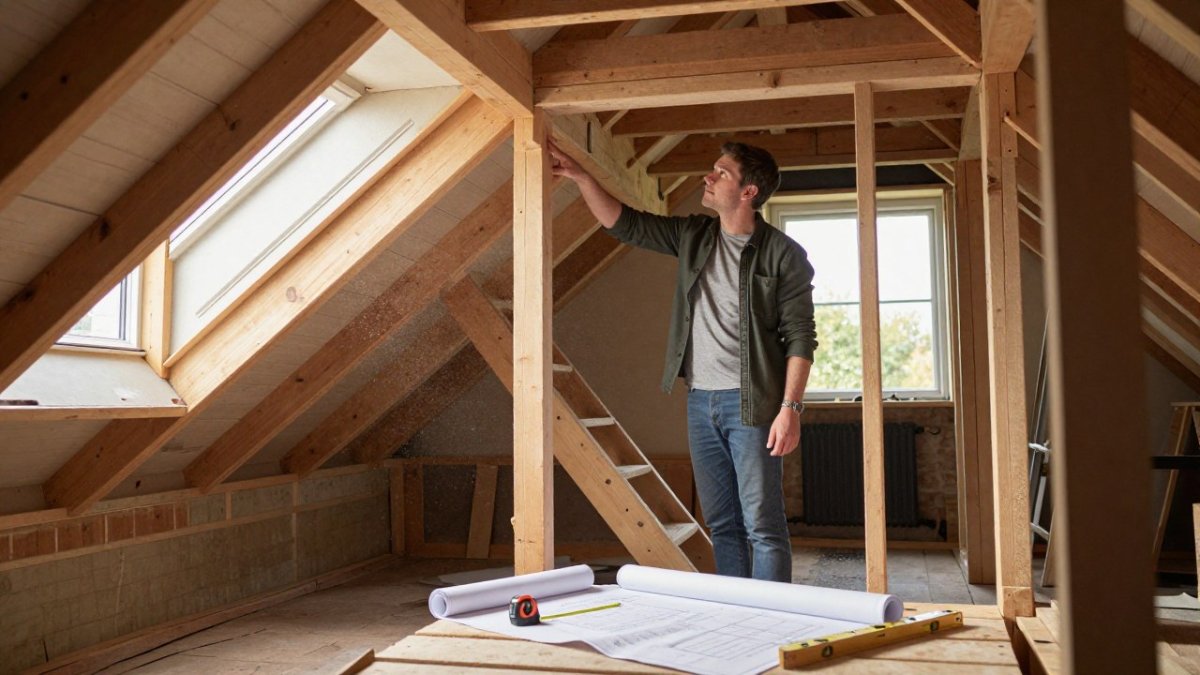
Walk the property inside and out. If you plan structural work, our guide to building regulations for loft conversions covers the rules that may apply.
For a thorough picture, pay for a building survey by a surveyor experienced with historic buildings. They spot hidden damp, failing lintels and roof defects a visual check will miss.
Room-by-Room Maintenance Checklist
Use this list as a regular routine, ideally twice a year:
Entrance hall: Check the front door for swelling, gaps and draughts. Inspect floor tiles and staircase joints.
Living rooms: Look for cracks around chimney breasts, check fireplace surrounds, and test sash cords and window catches.
Kitchen: Check behind units and around sinks for damp. Confirm the extractor fan is clearing moisture.
Watch out: Drilling or stripping paint in a pre-1919 property can release lead dust, so test paint before you start work (Construction hazardous substances: Lead).
Repairing Historic Timber Windows Step by Step
Timber sash windows are often worth saving. Repair can keep the original character of the window. Work through these steps in order:

Assess the frame. Press the sill and bottom rail with a screwdriver. Soft, spongy wood needs cutting out and splicing.
Remove the sashes. Take them out carefully and label each one so it returns to the right opening.
Strip the old paint. Use a low-heat method or a chemical stripper suited to old timber. Avoid high-heat tools that can scorch the glass.
Repair the joinery. Fill small gaps with a two-part wood filler. Replace damaged sections with matching timber.
Refit the cords or weights. Replace perished sash cords so the window runs smoothly.
Re-glaze and decorate. Use linseed putty for the glazing and apply breathable paint.
Expect several days per window, depending on damage. A specialist joiner familiar with historic joinery will get a better result than a general handyman.
The steps below set out the repair process in order, with the time each stage typically takes.
Step | What to do | Time |
Assess the frame | Press sill and bottom rail; cut out and splice soft wood | Part of the job |
Remove the sashes | Take out carefully and label each one | Part of the job |
Strip the old paint | Use low-heat method or suitable chemical stripper | Part of the job |
Repair the joinery | Fill small gaps; replace damaged sections with matching timber | Part of the job |
Refit the cords or weights | Replace perished sash cords | Part of the job |
Re-glaze and decorate | Linseed putty glazing; breathable paint | Part of the job |
Whole project | Repair one window | Several days per window |
Lime Plaster Repair in Historic Buildings
Historic walls are usually built with lime mortar and lime plaster. These materials breathe, letting moisture pass through. Replacing them with cement-based products traps water inside the wall and causes damage that can spread quickly.
Match new material to old. A modern gypsum or cement patch on lime plaster cracks the softer surrounding plaster, and the wall fails around it.
For small cracks, use a lime-based filler and finish with limewash.
Managing Damp and Moisture in Period Properties
Damp is the most common problem in older buildings and often misdiagnosed. If damp is affecting your home, you may want to explore eco-friendly heating options suited to older properties.
Good ventilation matters as much as any repair. Keep air moving through rooms, clear blocked airbricks, and avoid sealing walls with modern impermeable paints.
If you are unsure of the cause, ask a damp specialist or a conservation-minded surveyor to investigate before any treatment is applied.
Listed Building Consent for Alterations: When You Need It
Listed building consent is the most misunderstood part of owning a historic home. The line between repair and alteration is rarely obvious until you describe the work to a conservation officer. This decision guide with worked examples helps you judge your own project first.
The legal starting point
Listed building consent is required for any works of alteration or extension affecting the character of a listed building as a building of special architectural or historic interest.
Two misconceptions are worth correcting. If you find you need planning permission too, you can learn how to apply for planning permission online. Working without consent is a criminal offence, and enforcement can require you to undo work at your own cost (gov.uk).
Worked examples: consent likely, consent unlikely
Likely to need consent:
Replacing a timber sash window with a uPVC unit of a different profile, even if the opening size stays the same.
Removing an original chimney breast or opening up a fireplace that was bricked up historically.
Taking out a partition wall that forms part of the original plan form, even if it is not structural.
Unlikely to need consent (but check first):
Replacing broken glass in an existing window with matching glass and putty.
Repointing with a matching lime mortar where the mortar has failed.
Re-covering a roof with the same material and profile where the structure is sound.
The grey zone: Replacing a failed timber window with an identical timber one is usually treated as repair, but if the frame is rebuilt rather than spliced, some authorities want an application. The same applies to re-slating a roof where battens and felt are renewed. In this zone, a short pre-application conversation with the conservation officer is almost always faster than a refused application.
Conservation areas are different
If your home sits in a conservation area but is not listed, the test changes. Conservation area consent (now usually part of planning permission) is typically needed for demolition, and planning permission may be needed for alterations affecting the area's character, a prominent extension, a visible roof material change, or loss of a boundary wall. Article 4 directions can remove permitted development rights, so check the local planning authority's website before assuming a small project is exempt (When are permitted development rights removed?).
The application process in practice
Apply to the local planning authority. It usually requires a heritage statement describing the building's significance and the works' impact, plus drawings and photographs. Decision times vary between authorities, and complex cases take longer.
Watch out: starting work before consent is granted is a criminal offence even if consent is later granted retrospectively, so sequence your programme around the decision date rather than around your builder's availability.
A practical decision sequence
Check whether the building is listed and read the list entry, it describes the special interest, not every feature.
Describe the work in plain terms and ask: does this alter the character of the building?
If the answer is yes or maybe, search the local planning authority's online register for similar applications and their outcomes.
Book a pre-application discussion with the conservation officer for anything in the grey zone.
Submit the application with a heritage statement that explains why the work is necessary and how it preserves significance.
For projects involving both consent and structural repair, have the specification drawn up before you apply, so the conservation officer assesses actual materials and methods rather than a general description.
Repair Versus Replacement: A Decision Framework
Most owners of historic homes are told to repair rather than replace, but that principle only helps if you can apply it to a specific window, staircase or fireplace and defend the decision to a conservation officer, a joiner and your budget. For practical, sustainable approaches to materials and design, see sustainable home design tips for homeowners. This framework turns the principle into a documented decision.
Step 1: Establish what you are actually looking at
Before judging whether a feature can be repaired, identify its materials and construction. A sash window may be original softwood with hand-made glass, a later hardwood replacement, or a hybrid.
Record the feature with dated photographs, measurements and a short description of its condition. Note any previous repairs, because a feature that has already been heavily altered may have less claim to preservation than one that is largely original.
Step 2: Apply the repair test
A feature is a strong candidate for repair when most of the following are true:
The core material, timber, stone, plaster, metal, is sound enough to take a splice, patch or piecing-in.
The failure is localised: rot at a sill end, a cracked baluster, a failed section of plaster rather than a whole wall.
The original profile, moulding or joint can be matched by a competent tradesperson.
Replacement becomes defensible when:
The feature is structurally unsafe and cannot be made safe by repair.
More than about half of the original material has already been lost to previous alteration or decay.
The feature is a later addition of little significance and a like-for-like replacement is straightforward.
Even then, replacement should match the original in design, profile, material and finish. A like-for-like replacement is usually treated more favourably by conservation officers than a modern substitute, and it protects the building's significance for future owners.
Step 4: Document the decision
Write a short record for each feature you replace: what it is, why repair was rejected, what evidence you gathered, and what the replacement will match.
Watch out: a cheap replacement that fails within a decade is rarely cheaper than a well-executed repair, because the second replacement also loses the original fabric, so compare whole-life cost, not just the first invoice.
A worked example: a rotting sash window
A ground-floor sash window has rot in the bottom rail and one sill end. The glass is original, the upper sash is sound, and the frame is straight.
Now imagine rot through both sashes, a twisted frame and several panes replaced with float glass over the years. Repair is still possible, but little original fabric remains and a full rebuild approaches the cost of a new timber sash.
Where to get a second opinion
For anything beyond routine repair, a conservation-accredited surveyor or experienced heritage joiner can give a condition assessment that carries weight with the local planning authority, often the difference between a smooth consent application and a prolonged exchange of letters.
Building a Maintenance Schedule and Budget for Your Historic Home
Plan maintenance in yearly cycles so small jobs do not turn into large repairs. A workable schedule looks like this:
Monthly: Check gutters, downpipes and loft vents after heavy weather.
Twice yearly: Walk the room-by-room checklist and note any changes.
Every 3 to 5 years: Repaint external timber and inspect pointing and render.
Set aside a yearly maintenance budget, though your figure should depend on condition and age. Keep receipts and records: they add to the house's history and help with future sales.
For tailored support on planning, consent and repair work for your historic home, contact SD Architecture to discuss your project and get a quote.
Last Updated: November 12, 2026
Frequently Asked Questions
How do you maintain original features in an old house?
Start with a condition survey so you know what you have and where the weak points are. Keep gutters clear, check roof coverings and flashings each year, and ventilate roof spaces and subfloors to limit damp. Repair original features such as sash windows, plasterwork, staircases and mouldings rather than replacing them, and use materials compatible with the original fabric, such as lime-based mortars and plasters. Record each repair so future maintenance is easier to plan and budget for.
How should you repair historic timber windows?
Strip back loose paint, then check the frame, sash and glazing bars for rot, especially at the sill and bottom rail. Small areas of decay can often be cut out and replaced with matching timber using a scarf joint, and sound glazing putty or beads can be renewed. Sash cords, pulleys and balances can be restored to restore smooth operation. Draught-proofing strips fitted to the meeting rails improve comfort without losing the original window. Use a joiner experienced in historic joinery for significant decay.
Do you need listed building consent to alter a listed building in Hampshire?
Yes, in most cases. Listed building consent is generally required for works that would affect the character of a listed building. Check the current legislation and guidance with your local planning authority. Routine maintenance that uses like-for-like materials and methods often does not need consent, but checking with your local planning authority before starting work is the safest approach, as unauthorised works can lead to enforcement action.
How can you tell whether a historic feature should be repaired or replaced?
Repair is usually the better choice when the feature is structurally sound overall and its decay is localised, because original materials carry historic value and are often more durable than modern substitutes. Replacement may be justified when a feature is beyond economic repair, is a poor modern replacement itself, or poses a safety risk. A heritage surveyor or conservation-accredited contractor can assess the condition and advise on the most sympathetic option, and their written recommendation helps when discussing consent with the local planning authority.

Comments